




Am I the Problem?
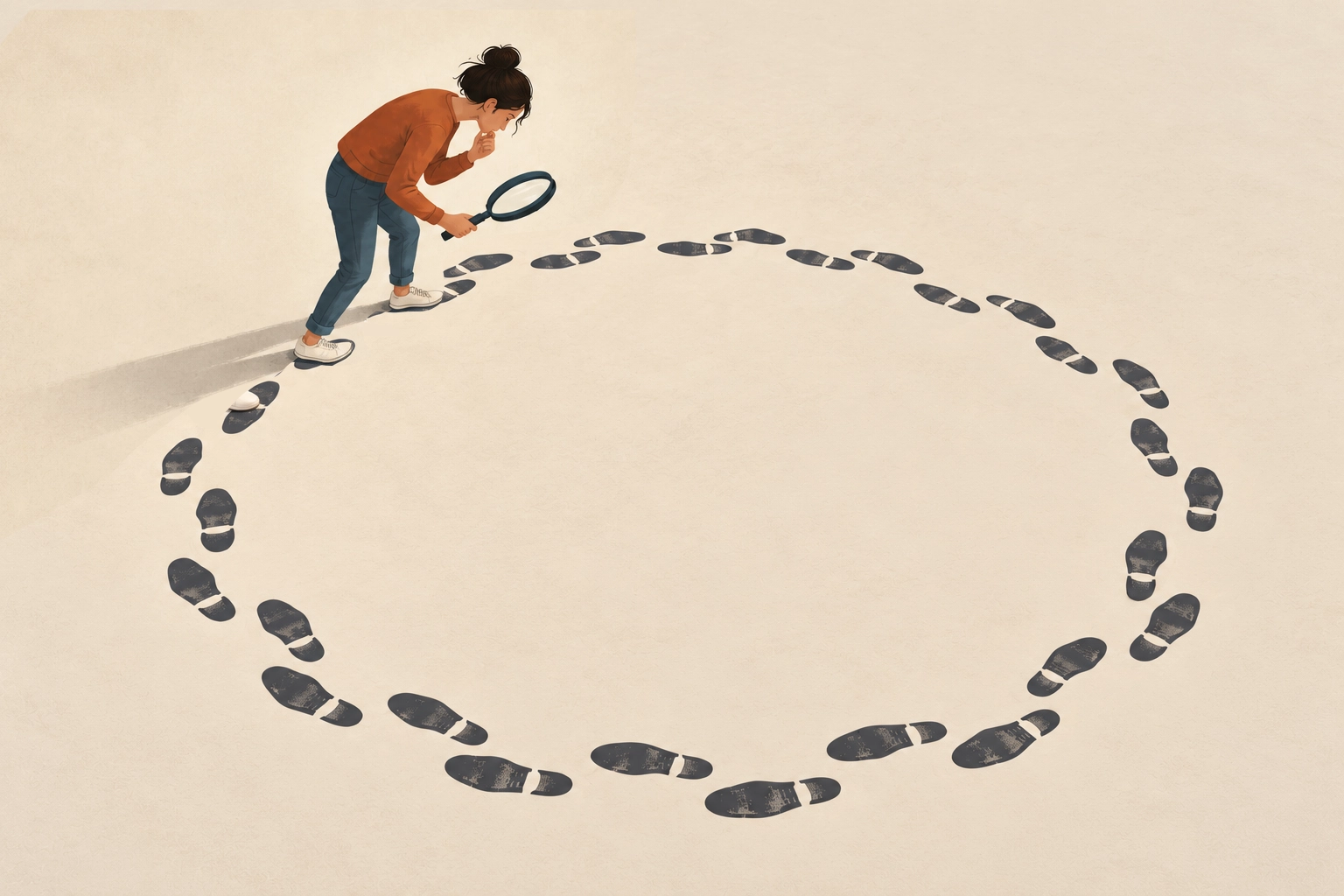
When you stare in the mirror, what do you see? That perspective is self-determined by shifting mindsets of whether we say, "Oh wow, I look good" or, "Geez, I look off today...why am I so ugly." We can always look inward, but everyone's voice sounds different; however, hopefully through the advice of this article you can begin to reflect rather than blame ourselves.
The Problem With the Problem
Am I the problem? This question has probably crossed more minds than we would like to admit. Maybe you had an argument with a friend. Maybe a relationship ended. Maybe you made a mistake at work. Maybe you simply had one of those days where everything seemed to go wrong, and suddenly your brain decided it was time to put you on trial. The evidence? One awkward conversation, one mistake, and approximately 47 memories from the last ten years.
The issue is not that we look inward. Self-reflection can actually be useful. The issue is what happens after we look inward. There is a major difference between asking, "What can I learn from this?" and deciding, "Everything is my fault, and apparently I am a terrible person."
One question opens a door.
The other tends to slam it shut.
Reflection Is Looking; Blame Is Judging
Self-reflection is the process of examining our thoughts, feelings, and behaviors so we can understand ourselves better. Self-blame, on the other hand, turns that examination into a verdict. Instead of looking at one behavior and deciding what could be changed, we begin attaching the behavior to our entire identity.
"I interrupted someone" becomes "I am inconsiderate."
"I made a mistake" becomes "I ruin everything."
"I handled that conversation badly" becomes "I am the reason every relationship I have fails."
Do you see the shift?
The first statements focus on behavior. The second statements turn behavior into identity. That is where reflection can become self-criticism, and research has repeatedly connected high levels of
self-criticism with poorer psychological outcomes. A systematic review and meta-analysis of 49 longitudinal studies involving more than 3,200 patients found that higher self-criticism was associated with poorer psychotherapy outcomes. This does not mean that noticing your mistakes is bad. It means that constantly attacking yourself may not be the motivational superpower we sometimes believe it is.
The Mirror Is Not Always Telling the Truth
Going back to that mirror, our perception can change depending on the mindset we bring to it. The same person can look in the mirror on Monday and think, "I look great," and then look at the mirror on Tuesday and decide, "I look awful."
Did the mirror change?
Probably not.
Our internal perspective did.
This is important because our thoughts are not always objective reporters. When we are stressed, anxious, depressed, or exhausted, we may be more likely to interpret situations through a negative lens. This is one reason cognitive behavioral approaches often focus on identifying patterns in thinking and questioning whether our interpretations are accurate, balanced, and useful.
The goal is not to convince yourself that every thought is wrong. That would be another form of unrealistic thinking. Instead, try asking:
"Is this thought describing what happened, or is it describing who I think I am?"
That small distinction can change the entire conversation.
Reflection or Rumination?
There is another mental trap that can make self-reflection difficult: rumination. Rumination involves repeatedly thinking about distressing experiences without necessarily moving toward a solution. It can look a lot like reflection from the outside because, technically, you are thinking about the past.
The difference is that reflection can help you understand and learn, while rumination can keep you stuck.
Research examining self-reflection and self-rumination found that self-reflection was associated with lower depression, while self-rumination was associated with higher depression. The researchers also found that reflection could become tangled with rumination, meaning that simply thinking deeply about yourself does not automatically make the process helpful.
So, if you find yourself replaying the same conversation for the 400th time, ask yourself a simple question:
"Am I learning something new, or am I just reopening the same file?"
If you are learning, keep going.
If you are reopening the file,o close the laptop.
Ask Better Questions
If self-blame is the problem, self-reflection needs a better question.
Instead of asking, "What's wrong with me?" try asking, "What happened?"
Instead of "Why do I always ruin everything?" try "What part of this situation was within my control?"
Instead of "Why am I such a failure?" try "What would I like to do differently next time?"
These questions do something important: they create space between your behavior and your identity.
You can take responsibility without taking the blame for everything.
You can apologize without deciding you are a horrible person.
You can admit you made a mistake without turning that mistake into your entire personality.
This is where accountability becomes much healthier. Accountability says, "I did something I regret, and I can take responsibility for it."
Self-blame says, "I did something I regret, therefore I am bad."
Those statements may feel similar, but they lead to very different places.
Would You Talk to Someone Else This Way?
One of my favorite tests for self-blame is to imagine that your best friend came to you with the exact same problem. If your friend said, "I messed up that conversation," would you immediately respond, "Yes, you are clearly a terrible person"?
Probably not.
You would probably ask what happened. You might help them identify what they could do differently. You might remind them that everyone makes mistakes.
So why do we suddenly become courtroom prosecutors when the person sitting in the defendant's chair is ourselves?
Research on self-compassion offers one possible answer. A systematic review and meta-analysis of 19 studies involving 1,350 participants found that self-compassion-related interventions produced a significant, medium-sized reduction in self-criticism compared with control groups, although the researchers also noted limitations in the quality and variation of the studies.
Self-compassion does not mean letting yourself off the hook.
It means changing the way you hold yourself accountable.
You can still say, "I need to do better," without adding, "and I hate myself for it."
The Difference Is What Happens Next
The way to tell self-reflection from self-blame is to look at the outcome.
What happens after you think about the situation?
If reflection leads you toward understanding, problem-solving, communication, or a plan for change, you may be engaging in something useful.
If it leads you toward shame, hopelessness, endless replaying, or the belief that you are fundamentally broken, you may have moved into self-blame or rumination.
This does not mean you can simply flip a switch and become perfectly compassionate toward yourself. Changing an inner voice takes practice. In fact, compassion-focused therapy research suggests that compassion-focused interventions can reduce self-criticism and increase self-soothing, although researchers have also emphasized that more high-quality controlled research is needed.
The goal is not to eliminate self-reflection.
The goal is to make reflection productive.
Am I the Problem?
Sometimes, yes.
And sometimes, no.
That may be the most honest answer.
We are all capable of making mistakes. We can hurt people. We can We can make choices that we later regret. That is part of being human. But making a mistake does not automatically make you the problem, and taking responsibility does not require you to destroy your self-worth in the process.
So, the next time you find yourself staring into the mental mirror asking, "Am I the problem?" pause for a second.
Ask yourself:
"What actually happened?"
"What part was mine?"
"What part belonged to someone else?"
"What can I learn?"
"What can I do differently next time?"
Those questions are not designed to make you feel better just for the sake of feeling better. They are designed to help you see yourself more accurately.
Because maybe the real goal is not to look into the mirror and always say, "Wow, I look amazing."
Maybe it is to look into the mirror and say:
"I see myself. I see the good, the bad, the awkward, the mistakes, and the growth. And I am still worth taking care of."
That is self-reflection.
That is accountability.
And, thankfully, it does not require you to put yourself on trial every time you have a bad day.


