




Beyond the Divide
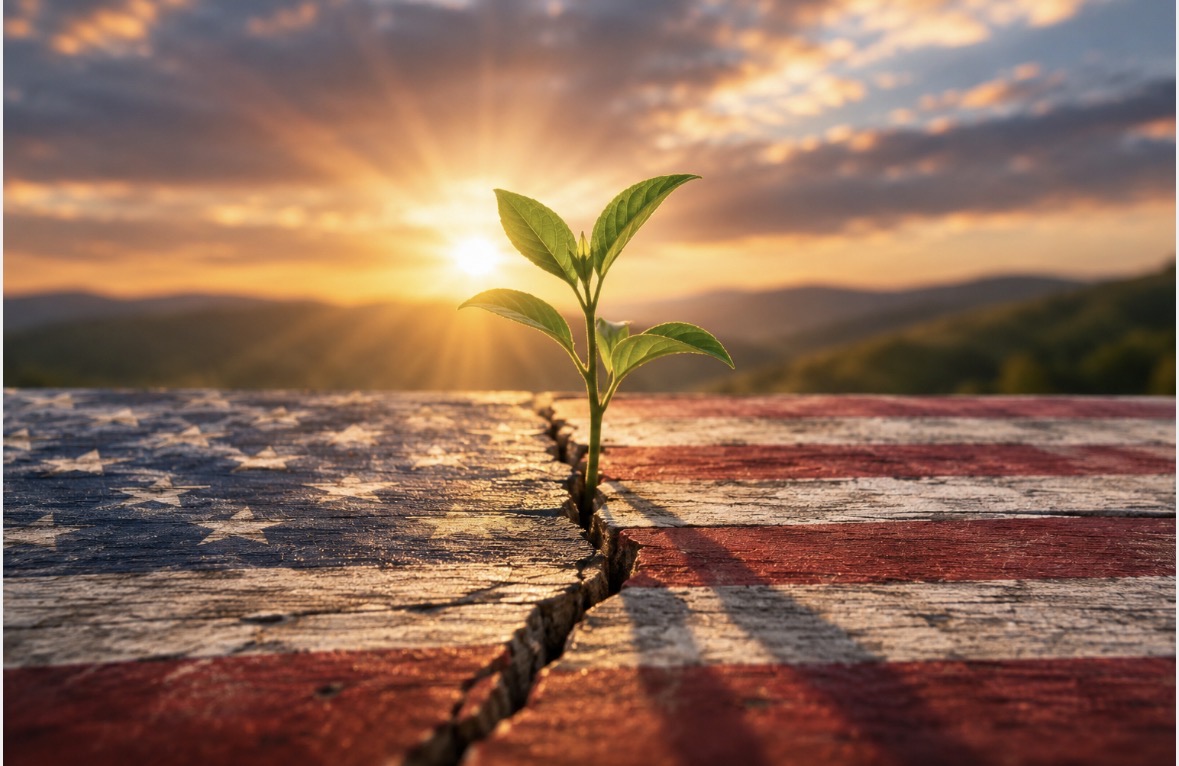
As Election Day Approaches, How Do We Care for Ourselves, One Another, and Our Collective Humanity?
There is a heaviness in the air. As another election approaches, many Americans are experiencing a profound sense of uncertainty. For some, it is fear about what the future may hold. For others, it is anger, frustration, sadness, or a growing sense of helplessness. And for many, it is simply exhaustion.
Exhaustion from the constant stream of information. From conversations that turn into arguments. From relationships strained by differences in beliefs. From feeling as though the world has become divided into opposing sides, with little room left for understanding, curiosity, or compassion.
Beneath all of this, there is something deeply human happening. We are afraid. And when human beings are afraid, we often move further away from one another at precisely the time when we need connection the most.
Understanding the Fear Beneath the Division
Fear is not simply an emotion. It is a physiological experience that affects how we perceive and respond to the world.
When our nervous systems perceive a threat, whether physical, emotional, social, or existential, we may shift into a state of heightened vigilance. Our bodies prepare to protect us. Our thinking can become more rigid. Our capacity for curiosity, perspective-taking, and empathy may diminish. We become more likely to see the world in terms of right and wrong, safe and unsafe, us and them.
In the context of political uncertainty, this response is understandable. People are concerned about their families, their livelihoods, their rights, their communities, and the future their children will inherit. These concerns are deeply personal, often connected to our identities, values, and experiences.
What feels threatening to one person may feel hopeful to another. What represents progress to some may represent loss to others. And when we fail to recognize the fear, pain, and humanity beneath another person's perspective, division deepens.
Understanding this does not require us to abandon our values, excuse harmful behavior, or pretend that all viewpoints have the same consequences. It simply invites us to recognize that behind many strongly held beliefs is a human being trying to make sense of an uncertain world.
The Cost of Polarization
One of the most painful consequences of our increasingly divided social environment is what it is doing to our relationships.
Families are struggling to communicate. Friendships are becoming strained. People are avoiding conversations, withdrawing from one another, or feeling compelled to choose sides. Some are grieving relationships that no longer feel emotionally safe. Others are experiencing loneliness because they feel unable to speak openly about their concerns. And still others have begun to lose faith in humanity itself.
This may be one of the most troubling aspects of polarization: the gradual erosion of our ability to see one another as fully human. When we reduce people to political labels, we lose sight of their complexity. We forget that individuals are shaped by countless experiences, relationships, fears, hopes, and beliefs. We stop asking questions and begin making assumptions.
We may become so focused on defending our positions that we lose our capacity to listen. Yet listening does not mean agreeing. Compassion does not mean abandoning boundaries. And understanding someone else's experience does not require us to compromise our own integrity.
We can disagree profoundly while still recognizing the humanity of another person. We can also recognize that some relationships require distance, particularly when interactions become threatening, demeaning, or emotionally harmful. Connection is important. So are boundaries, safety, and self-respect.
What Happens When We Live in a Constant State of Threat?
Our nervous systems were not designed to remain in a continuous state of alarm. Yet many of us are consuming information throughout the day that repeatedly activates our stress responses. News alerts, social media, political commentary, and emotionally charged conversations can create the sensation that danger is everywhere and that we must remain constantly vigilant.
Over time, this can contribute to anxiety, irritability, sleep difficulties, emotional exhaustion, and feelings of hopelessness. It can also affect how we relate to others.
When we are overwhelmed, we have less capacity to respond thoughtfully. We may become reactive, defensive, withdrawn, or quick to judge.This is why caring for our nervous systems is not an act of avoidance. It is an essential part of maintaining our psychological well-being and our capacity to engage meaningfully with the world.
We can remain informed without being consumed. We can care deeply without carrying the weight of every crisis. And we can participate in our communities while recognizing that our mental and emotional resources are not unlimited.
Sometimes the most meaningful thing we can do is step away from the noise, reconnect with our bodies, spend time in nature, or sit with someone we love. Not because the world's problems have disappeared, but because we need to restore our capacity to meet them.
Moving From Fear to Curiosity
What might happen if we approached some of our differences with curiosity rather than immediate judgment?
What if, instead of asking, "How could someone possibly believe that?" we asked, "What experiences have shaped this person's understanding of the world?"
What if we became more interested in understanding than in winning?
Curiosity creates space. It allows us to move beyond our automatic reactions and consider perspectives that differ from our own. It reminds us that our interpretation of reality, however strongly held, is influenced by our personal histories, relationships, environments, and experiences.
This does not mean that every disagreement can or should be resolved. Nor does it mean that we should remain in conversations that undermine our emotional safety.
But when circumstances allow, curiosity can interrupt the cycle of fear, judgment, and disconnection. It can help us remember that our differences are only one part of the human experience.
Remembering Our Interconnectedness
Physician, thought leader, and speaker Zach Bush has explored the idea that human beings are not separate from one another or from the natural world. Rather, we exist within an extraordinarily complex web of relationships, ecosystems, and life. This perspective invites us to reconsider the illusion of separateness.
We often move through the world believing ourselves to be independent individuals, divided by our beliefs, identities, and experiences. Yet our lives are deeply interconnected.
The air we breathe, the water we drink, the food we eat, the communities we inhabit, and the ecosystems that sustain us all remind us that our existence is fundamentally relational.
We depend on one another in ways we rarely stop to consider. And perhaps this is one of the greatest opportunities within our current moment of uncertainty: the possibility of remembering what connects us. Not by denying our differences, but by recognizing that difference itself is part of the extraordinary diversity of life.
In nature, diversity is not inherently a problem to be solved. It is often a source of resilience, adaptation, and possibility.What if we began to approach humanity with a similar sense of wonder?What if we could recognize that our collective future is shaped not only by the positions we defend, but also by the quality of the relationships we create?
Choosing How We Show Up
We may not be able to control the outcome of an election, the behavior of political leaders, or the opinions of those around us. But we do have some influence over how we participate in the world.
We can choose to examine our assumptions. We can practice recognizing when fear is driving our reactions. We can seek reliable information, engage thoughtfully in civic life, and make decisions that reflect our values. We can create space for difficult conversations without sacrificing our boundaries. We can teach our children that disagreement does not automatically make someone an enemy. We can practice compassion while holding ourselves and others accountable. And perhaps most importantly, we can resist the temptation to surrender to hopelessness.
Hope is not the belief that everything will turn out exactly as we want. It is the willingness to remain engaged with life, even when the outcome is uncertain.
A Hope for Humanity
There is no denying that we are living through a period of profound uncertainty and change. And yet, throughout human history, periods of disruption have also created opportunities for reflection, transformation, and new ways of relating to one another.
Perhaps the question before us is not simply what kind of political future we will create, but what kind of human beings we will become in the process.
Will we allow fear to harden us? Will we continue to define ourselves by what separates us? Or can we begin to remember that beneath our political identities, our disagreements, and our deeply held beliefs, we share something far more fundamental?
We are human. We are vulnerable. We are imperfect. We are capable of causing harm, and we are capable of extraordinary compassion, creativity, healing, and love. We belong to one another and to a living world that sustains us.
The interconnectedness Zach Bush speaks about offers a powerful reminder: our future cannot be understood solely through the lens of individual survival or separation. Our lives unfold within relationships, and the health of the whole is inseparable from the health of its parts.
Perhaps our greatest opportunity is to begin living with a deeper awareness of that connection. To recognize that we do not have to become identical to belong.
That unity does not require uniformity. That compassion and accountability can coexist. And that even in the presence of fear, we can choose how we respond to one another.
Whatever happens in this election, humanity's story does not end on Election Day. We will still wake up beneath the same sky. We will still share this planet. We will still need community, connection, belonging, and love. And we will still have opportunities, large and small, to participate in creating the kind of world we hope to inhabit.
Perhaps hope for humanity begins here: not in the absence of our differences, but in our willingness to remember our interconnectedness despite them.
At Tiffany Griffiths, Psy.D. & Associates, Inc., we recognize that uncertainty, stress, and conflict can affect emotional well-being. If you are struggling with election-related anxiety, strained relationships, or feelings of hopelessness, speaking with a mental health professional can provide space to explore these experiences and reconnect with your own sense of balance, clarity, and purpose.


