




Last Call for the Old Era: Notes From My Final Phase of The Mother Era and Perimenopause
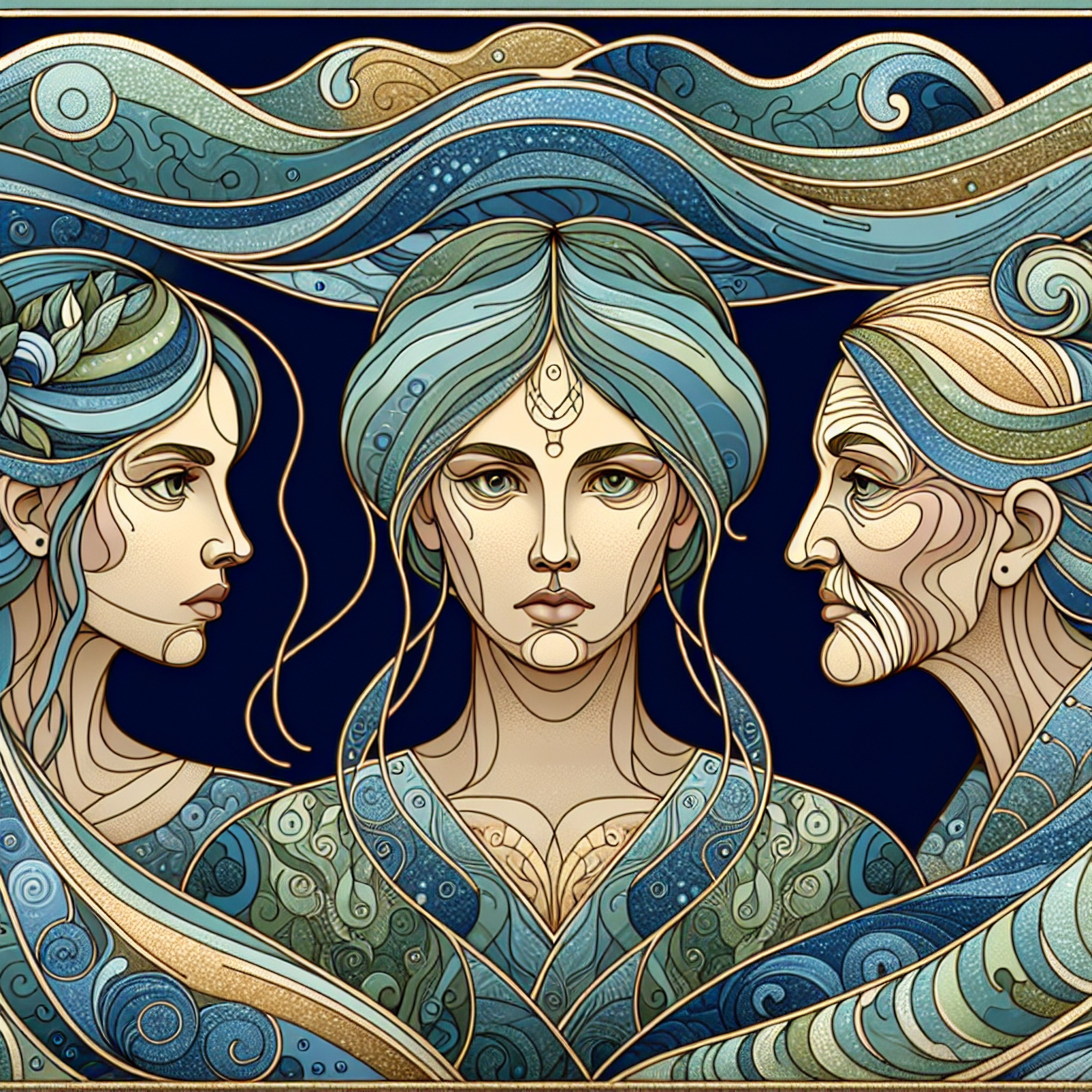
There’s a particular kind of countdown happening in my body right now.
It’s not on my phone. It’s not on a calendar. It’s cellular. Lunar. Elemental. It’s the feeling of living in the last year of an era and realizing that endings aren’t polite. They don’t wrap themselves in bows. They unravel. They burn off what’s no longer true. They demand we stop negotiating with our own exhaustion.
Perimenopause can be an initiation that arrives like a storm: sleep disappearing, moods becoming wild animals, libido playing hide-and-seek, skin and weight and memory shifting, joints complaining, hot flashes that feel like internal wildfires, and a mind that sometimes feels like it’s buffering.
It’s not just “hormones.” It’s a full-body reckoning.
And no one warned us the reckoning would be so… spiritual.
The Unspoken Ordeals: What Women Carry (and Pretend Is Fine)
A lot of women I know have spent a lifetime mastering the art of “fine.”
Fine while caregiving. Fine while achieving. Fine while raising children, leading teams, managing schedules, holding emotional space, smoothing edges, absorbing impact, and anticipating everyone else’s needs like a professional psychic. Fine while quietly self-abandoning.
Self-abandonment is sneaky. It doesn’t always look like collapse. Sometimes it looks like competence.
It looks like saying yes when your body says no.
It looks like making yourself smaller so everyone else can stay comfortable.
It looks like ignoring your intuition because it might disrupt the peace.
It looks like living with low-grade resentment and calling it “being a good woman.”
It looks like caretaking so consistently that you forget your own contours.
Perimenopause has a way of making that impossible. It’s like the body finally says: We’re done pretending. The tolerance for self-betrayal drops to zero. The old coping strategies stop working. The nervous system stops accepting bad deals. And suddenly, you’re forced into a new question not “How do I keep up?” but:
What is my life actually for now?
1972 to Now: How Far We’ve Come (and How Far We Still Have to Go)
I was born in 1972—into a world that had just cracked open a door for women, but hadn’t exactly built the hallway yet. In my lifetime, women have gained space, language, visibility, and power. We can have bank accounts and credit cards without a man’s signature (a fact that still makes my brain short-circuit when I remember how recent that is). We have more career options, more educational access, more legal recognition, more public voice.
And still—so many of us are living the same ancient script with modern fonts:
Be pretty, but not too sexual.
Be smart, but not intimidating.
Be strong, but don’t make anyone uncomfortable.
Be the glue.
Be the organizer.
Be the emotional regulator.
Be the “nice one.”
Be everything for everyone.
We’ve come far enough to taste freedom. But not far enough to stop being punished, internally and externally, for fully embodying it. And when the body enters this midlife transformation, it’s like a truth serum gets injected into the psyche. All the places you’ve compromised yourself start to glow. All the ways you’ve played small start to itch. All the ways you’ve carried too much start to feel… absurd.
Not because you’re weak. Because you’re waking up.
The Midlife Metamorphosis: When Your Body Rewrites the Story
Perimenopause is often described medically like a “decline,” which is such a wild insult for something that requires this much courage. What’s happening is not a diminishment. It’s a reorganization.
Your hormones are changing, yes, but so is your relationship to time. So is your tolerance for nonsense. So is your need for authenticity. So is your nervous system’s willingness to keep sacrificing your needs to keep a room peaceful.
This is the season where the body becomes more honest than the personality. It’s common to grieve the body you once had. The ease. The predictability. The way you could do too much and still bounce back. But there’s another possibility here:
What if this isn’t your body betraying you, what if it’s your body liberating you?
What if the insomnia is forcing you to stop living a life that requires sedation to tolerate?
What if the anxiety is the truth that you’ve been overriding for decades?
What if the anger is sacred—an immune system response to disrespect?
What if the hot flashes are the fires of initiation, burning through the old agreements?
There’s a spiritual intelligence in the endocrine system. There’s a wisdom in the way the body refuses to keep paying the cost of our old identities.
Shedding Identities: The Great Unbecoming
This era asks for shedding. Not in a tidy, “I did a journal prompt and now I’m healed” way. In a skin-sloughing, ego-stripping, I don’t know who I am without my roles way.
We shed the identity of the woman who stays quiet to keep the peace.
We shed the identity of the woman who carries the emotional labor like it’s her job.
We shed the identity of the woman who confuses overgiving with love.
We shed the identity of the woman who thinks rest is something she must earn.
And we grieve. Because even the identities that hurt us once kept us safe. They were strategies. They were armor. They were ways of surviving a world that didn’t always make room for female truth. But there comes a time when the armor becomes heavier than the battle.
Perimenopause is often that time. You can feel yourself becoming allergic to performance. You can feel yourself wanting fewer masks and more meaning. You can feel the soul leaning forward, impatient.
Motherhood: The Beautiful Ache of Moving Beyond It
Motherhood is one of the deepest initiations we’re given, and one of the least honored. Not just in the “thank you, moms” Hallmark sense. I mean honored as a psychic and spiritual event that rearranges a woman forever.
If you’ve mothered children, you know the bittersweet truth: motherhood is not just something you do. It becomes a part of your cells.
And then, inevitably, comes the next threshold:
The children don’t need you in the same way.
The daily intensity loosens.
The identity of “needed” changes form.
That transition can feel like freedom and grief holding hands. It’s bittersweet to step out of the era where your body and attention were structured around care. It’s bittersweet to realize you can’t go back, because you’ve given so much, and because time is real, and because love evolves.
And sometimes it hits like this:
Who am I when I’m not actively mothering someone every day?
What do I do with all this love once it’s not constantly being poured outward?
What part of me did I put on a shelf to raise them?
This is where the next era begins, not as a replacement for motherhood, but as a reclamation.
Not less love. Different love.
Not less devotion. Wider devotion.
The Power That Was There All Along
Here’s the thing about stepping into power: it’s not a costume you put on at midlife. It’s an unveiling.
Power isn’t “domination.” It’s not volume. It’s not proving. It’s not perfection.
Power is presence.
Power is truth.
Power is choosing yourself without apology.
Power is ending the era of self-abandonment.
This is the season where many women stop negotiating with their own knowing.
We start saying:
- “I’m not available for that.”
- “That doesn’t work for me.”
- “I need rest.”
- “I need pleasure.”
- “I need quiet.”
- “I need to be in my own life.”
And when we do, we sometimes discover something startling:
The world doesn’t collapse.
The people who love us adjust.
The ones who relied on our self-abandonment may protest, because it was convenient.
But the soul… the soul exhales.
The Spiritual Invitation: Becoming the Woman Who Doesn’t Leave Herself
If you’re in perimenopause, you are not “breaking down.”
You are being initiated.
You are being asked to become the woman who doesn’t leave herself.
To stop trading your truth for belonging.
To stop calling depletion “normal.”
To stop treating your body like a machine and your spirit like an afterthought.
To stop making everyone else’s comfort more important than your own aliveness.
This is a holy threshold.
A shedding.
A simplification.
A return.
And maybe, just maybe, this is the last moments of the old era for you too.
Not because everything will magically get easy overnight, but because something inside you is done bargaining with the life you’ve outgrown. The next era isn’t about becoming someone new. It’s about becoming what was always true…before the caretaking, before the conditioning, before the performance.
The woman underneath the roles.
The woman whose power was never missing, just covered.
So here I am, in the last moments of an era, praying and laughing and sweating and grieving and waking up.
And I’m choosing a new vow:
I will not abandon myself.
Not for love.
Not for approval.
Not for peacekeeping.
Not for the old story.
Because the body is changing.
The identity is shedding.
The soul is calling.
And the woman I’m becoming is not interested in going back.


