




Women, Power, and the Bigger Table
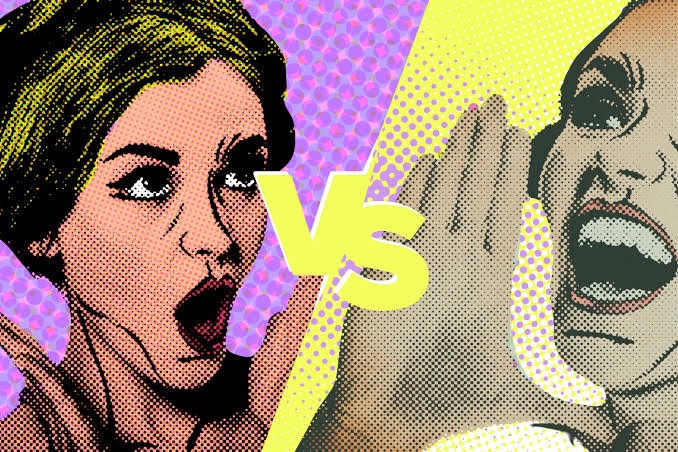
There is something I have struggled to make sense of throughout my 20 years as a woman in business. Some of the most painful professional experiences I have had have not come from men. They have come from other women. These are women I supported, employed, promoted, mentored, and trusted. And when those relationships deteriorated, the conflict was rarely straightforward. It wasn't simply, "I disagree with you." It was often personal, relational, and moralized.
Suddenly I wasn't merely a boss who had made a decision someone disliked. I was selfish, controlling, greedy, unethical, and unkind. Somehow, a disagreement about roles, compensation, accountability, performance, boundaries, or the needs of the business could transform into a judgment about my character. And I have often wondered: Why does this happen? Especially among women? And perhaps most painfully, why does it seem to happen so frequently in fields built around healing, empathy, psychology, and care?
The answer is complicated. And it is important to begin with what the answer is not. Women are not biologically destined to hate, sabotage, or compete with one another. Many of the most nourishing, collaborative, fiercely loyal relationships in my life have also been with women. But there are psychological and cultural forces that can make conflict between women take very particular forms.
Women are often socialized to compete indirectly
Historically, women have had less direct access to power, money, status, authority, and independence than men. When access to resources is constrained, competition doesn't disappear. It changes form. Research on relational aggression has shown that conflict among women and girls may sometimes be expressed less through overt confrontation and more through social mechanisms: exclusion, reputation damage, coalition-building, gossip, withdrawal of belonging, or questioning another person's character.
In adulthood, those behaviors can become remarkably sophisticated. The workplace version may sound like: "I just don't feel safe with her." "She's toxic." "She only cares about money." "She's not who I thought she was." Sometimes those statements describe genuine problems. And sometimes they become socially acceptable weapons.
Women are still uncomfortable with female power
We like to think we have moved beyond this. We haven't. Our culture still holds contradictory expectations for women in leadership. A woman is supposed to be warm, nurturing, collaborative, emotionally available, accommodating, and relational. A leader is expected to make decisions, establish boundaries, allocate resources, evaluate performance, say no, terminate people, negotiate aggressively, and tolerate being disliked. Those expectations collide.
A male leader who sets a firm boundary may be experienced as decisive. A woman who sets the same boundary may be experienced as cold. A male owner protecting the financial viability of his company may be described as business-minded. A woman doing the same thing may be described as greedy. This creates an impossible position for female leaders. Be powerful, but don't make anyone feel your power. Lead, but don't become too authoritative. Succeed, but remain sufficiently self-sacrificing that no one feels threatened by your success.
Sometimes envy disguises itself as moral judgment
Envy is one of the most difficult human emotions to admit. Most of us would rather believe someone is bad than acknowledge that something about their life activates an unfulfilled longing in us: their money, freedom, confidence, influence, recognition, marriage, business, or willingness to take up space.
Jung describes this through the shadow. The qualities we have disowned in ourselves are often the qualities that most intensely provoke us in others. A woman who has never allowed herself to want power may judge a powerful woman. A woman who has learned that goodness requires self-sacrifice may condemn a woman who earns substantial money. A woman who has been trained to accommodate others may experience another woman's boundaries as cruelty. What we cannot consciously own sometimes returns as moral outrage toward someone else. That doesn't mean every criticism is projection. But projection is real.
Scarcity changes women
For generations, there were remarkably few seats available to women: one woman at the table, one female executive, one woman with influence, one woman who was allowed to become powerful without losing social acceptance. Even as opportunities expand, the psychology of scarcity can remain.
There is even a phenomenon sometimes called the "queen bee" effect, in which women operating in male-dominated or highly competitive environments distance themselves from or become unusually critical of other women. Increasingly, researchers understand this not simply as a defect in women, but as an adaptation to environments in which female belonging and advancement have historically been precarious.
Scarcity teaches us: There may not be enough room for both of us.
Abundance says: Build a bigger table.
Helping professions create another layer
Mental health is a particularly interesting environment in which to watch these dynamics unfold. Our profession attracts people who care deeply. It also attracts wounded healers. Most of us entered this profession partly because we know something about suffering. That can create extraordinary compassion. It can also create blind spots.
Therapists are not exempt from projection, envy, unresolved attachment wounds, authority conflicts, narcissistic injuries, shame, power struggles, or the desire to be seen as the "good" person. In fact, our psychological vocabulary can sometimes make conflict worse. Ordinary disagreement becomes "unsafe." Boundaries become "controlling." Accountability becomes "toxic." Someone we dislike becomes a "narcissist." A business decision becomes evidence of someone's pathology.
Clinical language can become weaponized in ways that allow ordinary human conflict to masquerade as psychological diagnosis. And because caregiving professions often carry a deep cultural association between virtue and self-sacrifice, money becomes particularly charged. A therapist is supposed to care. A business owner has to care and protect the financial sustainability of an organization. When those realities collide, the owner can easily become the villain.
There is also something deeply painful about betrayal by women
Perhaps these experiences hurt so much because women often expect other women to understand. There is an implicit hope: You know how hard this is. You know what it means to build something while navigating gender expectations. You know what it means to carry emotional labor. You know how often women have been underestimated. So surely you won't do that to me. When another woman attacks, undermines, uses, or betrays us, it can feel like a violation of an unspoken sisterhood.
The pain isn't just professional. It is archetypal.
There is an ancient longing for the circle of women, the village, the mothers, sisters, healers, elders, and companions who help one another through life. And there is tremendous grief when that circle becomes a battleground.
I don't want to become cynical about women This part matters most to me.
I do not want my wounds to become my worldview. I don't want experiences of betrayal to convince me that other women cannot be trusted. That would allow the injury to reproduce itself through me.
Ram Dass often spoke about life as curriculum. The people who activate us become part of the curriculum. Perhaps part of my own curriculum has been learning the difference between generosity and overfunctioning; between mentoring someone and rescuing them; between compassion and tolerating poor behavior; between supporting people and needing them to understand my intentions; between being a good leader and needing to be perceived as a good person by everyone I lead. Those are very different things. And perhaps female leadership requires something particularly courageous: the willingness to remain compassionate without being endlessly accommodating; the willingness to be generous without becoming exploitable; the willingness to examine our own shadow while refusing to carry projections that belong to someone else; the willingness to celebrate another woman's power without diminishing our own. And the willingness to say: There is room for both of us. I do not need you to shrink for me to expand. And I will no longer shrink so that you feel more comfortable either.
That, to me, is what women supporting women actually looks like. Not unconditional agreement. Not performative sisterhood. Not the absence of conflict. It is the capacity to disagree without destroying one another. To compete without dehumanizing one another. To hold one another accountable without turning one another into villains. To witness another woman's success without making it evidence of our own inadequacy.
And perhaps most importantly, to build cultures where another woman's power no longer feels like a threat.
There should be enough room at the table.
And when there isn't? Maybe our work is not to fight over the chair. Maybe our work is to build a bigger table.


