


School Blues
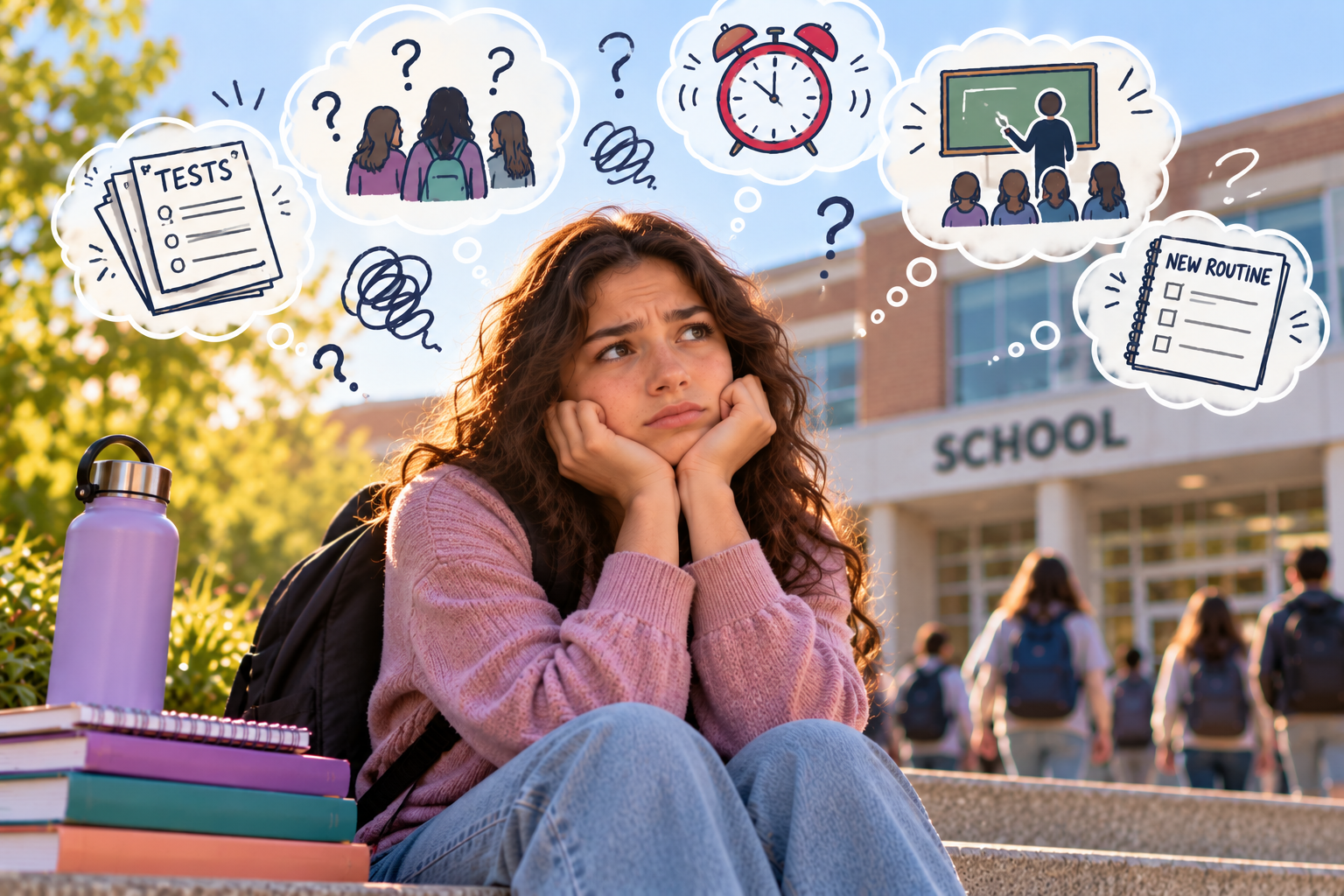
You wake up hearing the bell ring and immediately think of that annoying phrase, "The bell doesn't dismiss you, I do!" That's when you realize the bell noise was actually your alarm, and you still have a month of a school-free summer left. However, why do people start stressing themselves out about impending schooling before it has even arrived? In this article, I aim to give coping mechanisms and ways to shift into positive thinking when it comes to the present back-to-school fever.
The Summer Is Ending…But That Does Not Mean Your Fun Is Over!
Back-to-school season has a funny way of turning a perfectly peaceful summer into a countdown clock. Suddenly, school supplies are everywhere, emails start arriving, schedules begin forming, and somewhere in the distance you can practically hear the collective groan of students everywhere. For many people in Scranton and across NEPA, the transition from summer freedom to school routines can bring excitement, nervousness, or a combination of both.
The important thing to remember is that feeling stressed about a transition does not automatically mean something is wrong with you. Transitions require adjustment, and our brains generally like knowing what to expect.
The problem begins when we allow the upcoming school year to take over the present moment. If you spend the final weeks of summer mentally living through every possible test, assignment, social interaction, and early morning, you are experiencing the stress of something that has not even happened yet. Congratulations! You have somehow managed to attend school without leaving your house.
The Anxiety of the Unknown
Anticipatory anxiety is one reason back-to-school thoughts can feel so powerful. Anxiety is a normal human emotion that can help prepare us for challenges, but it can become a problem when worry becomes excessive or starts interfering with daily life. The American Academy of Pediatrics explains that healthy anxiety can be an expected response to challenges such as taking a test, while anxiety disorders involve patterns of symptoms that can significantly interfere with functioning.
A new school year can contain plenty of unknowns: new teachers, new classes, new schedules, new social situations, or simply the question of whether last year's problems will follow you into this year's hallway.
One useful way to approach this is to separate what you can control from what you cannot. You may not be able to control who your teacher will be or whether someone else has a bad attitude before 8:00 a.m. However, you can control how you prepare, how you communicate, how you respond to stress, and whether you ask for help.
This shift does not magically erase anxiety, but it can make the situation feel less overwhelming because your attention moves from predicting every possible disaster to identifying the next useful action. The AAP similarly emphasizes the importance of coping skills, preparation, and supportive relationships when students are dealing with school-related anxiety.
Do Not Let Your Brain Write the Whole School Year in August
One of the easiest mental traps during back-to-school season is turning one small concern into a giant prediction.
"I am nervous about one class" becomes "I am going to fail."
"I do not know anyone in this class" becomes "I am going to have no friends."
"Last year was difficult" becomes "This year will be exactly the same."
This is where cognitive behavioral strategies can be useful. Cognitive behavioral therapy, or CBT, often focuses on the connections between thoughts, feelings, and behaviors. One part of this approach involves examining whether our thoughts are accurate, helpful, or based on assumptions rather than evidence.
The goal is not to force yourself to think positively all the time or pretend everything will be perfect. Instead, it is about asking whether there is another possible explanation.
So, if your brain says, "This is going to be the worst year ever," you might respond with, "I am nervous because I do not know what this year will be like, but I have handled difficult school days before, and I can ask for help if I need it."
That is not fake positivity.
That is realistic thinking.
Start the Routine Before the Routine Starts
Sleep is another major part of the back-to-school transition. During summer, schedules can become more flexible, and suddenly going from sleeping until noon to waking up before the sun can feel like a personal attack.
For adolescents, this can be particularly difficult because biological changes during adolescence naturally shift the body's circadian rhythm toward later sleep and wake times. The American Academy of Sleep Medicine recommends that teenagers ages 13–18 regularly obtain 8–10 hours of sleep per 24 hours. Research has also found that later school start times are associated with increased sleep duration among adolescents, primarily because students are able to wake later.
So, if your first thought when you hear the words "back to school" is "I am going to be exhausted," there may actually be some science behind that feeling.
Instead of waiting until the night before the first day to completely change your schedule, gradually moving bedtime and wake time earlier can make the transition less dramatic. You can also begin practicing small parts of the school routine before school starts. Pack your bag. Organize your workspace. Figure out what you need for the first week.
You do not need to recreate the entire school day in your living room, but small preparations can reduce the number of decisions you have to make when the first morning arrives.
And please, for the love of all things caffeinated, remember that an energy drink is not a substitute for sleep.
A Little Preparation Can Go a Long Way
Another strategy is to create a short list of things you can realistically accomplish before school begins.
Maybe you want to organize your backpack, purchase supplies, choose a few outfits, or figure out your transportation. The goal is not to spend every remaining summer day preparing for school. The goal is to reduce avoidable stress.
You can also create a "worry list."
If a concern keeps popping into your head, write it down. Then ask yourself: Is this something I can act on right now?
If yes, identify one small step.
If no, remind yourself that you do not have to solve a future problem today.
This may sound simple, but the idea behind it is important. Instead of allowing your mind to repeatedly cycle through the same "what if" questions, you are giving the concern a place to exist outside of your head. You are also separating problems that require action from worries that are currently outside of your control.
The AAP notes that students who are better prepared and who have supportive coping skills and relationships often do better when facing ordinary school-related challenges. Preparation is not about eliminating every uncomfortable feeling; it is about helping yourself feel more capable of handling what comes next.
School Is a Chapter, Not Your Entire Identity
One of the biggest mental battles students can face is believing that school performance defines who they are.
A grade is information about one assignment at one point in time.
It is not a measurement of your intelligence.
It is not a measurement of your worth.
It is not a measurement of your future.
And it certainly does not tell your entire story.
This is especially important when thinking about academic pressure. Having goals is healthy, but perfection is not a requirement for success. A student can work hard and still have a bad test. Someone can struggle with math and excel in art. Someone can have a difficult semester and still grow into a successful adult.
Human beings are far more complicated than report cards.
If school is one part of your life, then let it remain one part. Make time for friends. Make time for family. Make time for hobbies. Make time to do absolutely nothing every once in a while.
Your brain is not a machine that exists solely to produce grades.
Back-to-School Does Not Have to Mean Back-to-Stress
The return to school is a transition, and transitions can be uncomfortable. But uncomfortable does not mean impossible.
You can prepare for the routine without spending the final days of summer worrying about every possible scenario. You can acknowledge anxiety without allowing it to make every decision. You can have a bad day without deciding that the entire year is ruined.
So, as the school year approaches here in Scranton and throughout NEPA, take a breath.
Enjoy the rest of your summer.
Start adjusting your routine when it makes sense.
Think about what you can control.
Challenge the thoughts that turn one problem into a catastrophe.
And remember that asking for support is a strength rather than a weakness.
For some students, however, back-to-school anxiety can become more than ordinary nerves. If anxiety begins interfering with attendance, sleep, relationships, academic functioning, or everyday life, it may be time to reach out for additional support. The American Academy of Pediatrics notes that anxiety disorders can significantly affect students' ability to function at school and that supportive adults, schools, families, and evidence-based treatment can all play important roles in helping young people.
The school bell may eventually ring, but you do not have to let it ring in a year of constant mental battles.
Sometimes the best way to approach a new school year is not with the mindset of "I have to be perfect."
Instead, try:
"I am going to take this one day at a time, and I will figure things out as they come."
And if all else fails, remember:
"The bell does not dismiss you. Your teacher does."
So, you might as well make the most of the time before it rings.